
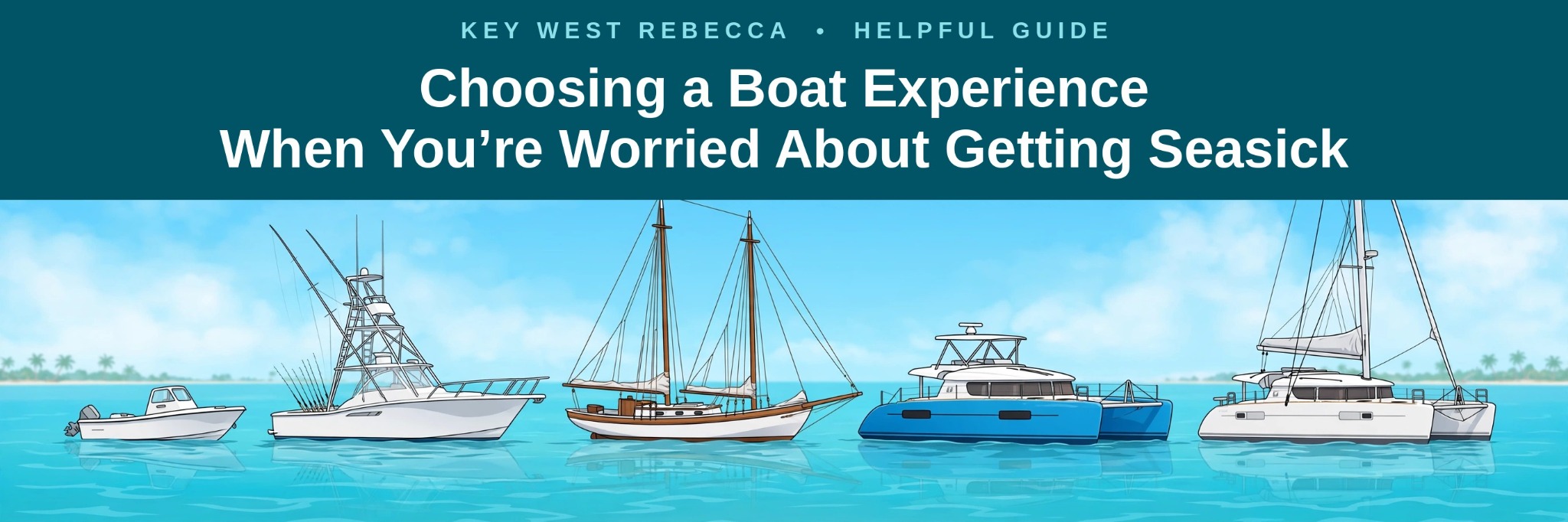
You want to experience Key West from the water, but one question keeps bobbing to the surface: What if I get seasick? That concern does not automatically mean every boat day is off the table. A sunset sail, sandbar outing, fishing charter, eco-tour and offshore trip can involve very different boats, routes, travel times and water conditions. The best choice begins with understanding those differences and being honest about your own comfort level.
No boat can guarantee a motion-free ride, and no planning step can promise that you will not feel sick. But thoughtful questions can help you avoid choosing an experience simply because it is popular and instead choose one that makes sense for you.
Motion sickness can occur when what your eyes see does not match the movement your inner ear senses. That mismatch may lead to dizziness, nausea or vomiting. It also helps explain why looking down at a phone or focusing on something close to you can sometimes feel less comfortable than looking outward toward the horizon.
For medical guidance, prevention strategies and medication considerations, read the CDC guidance about motion sickness. This guide focuses on choosing and planning a Key West experience, not diagnosing or treating motion sickness.
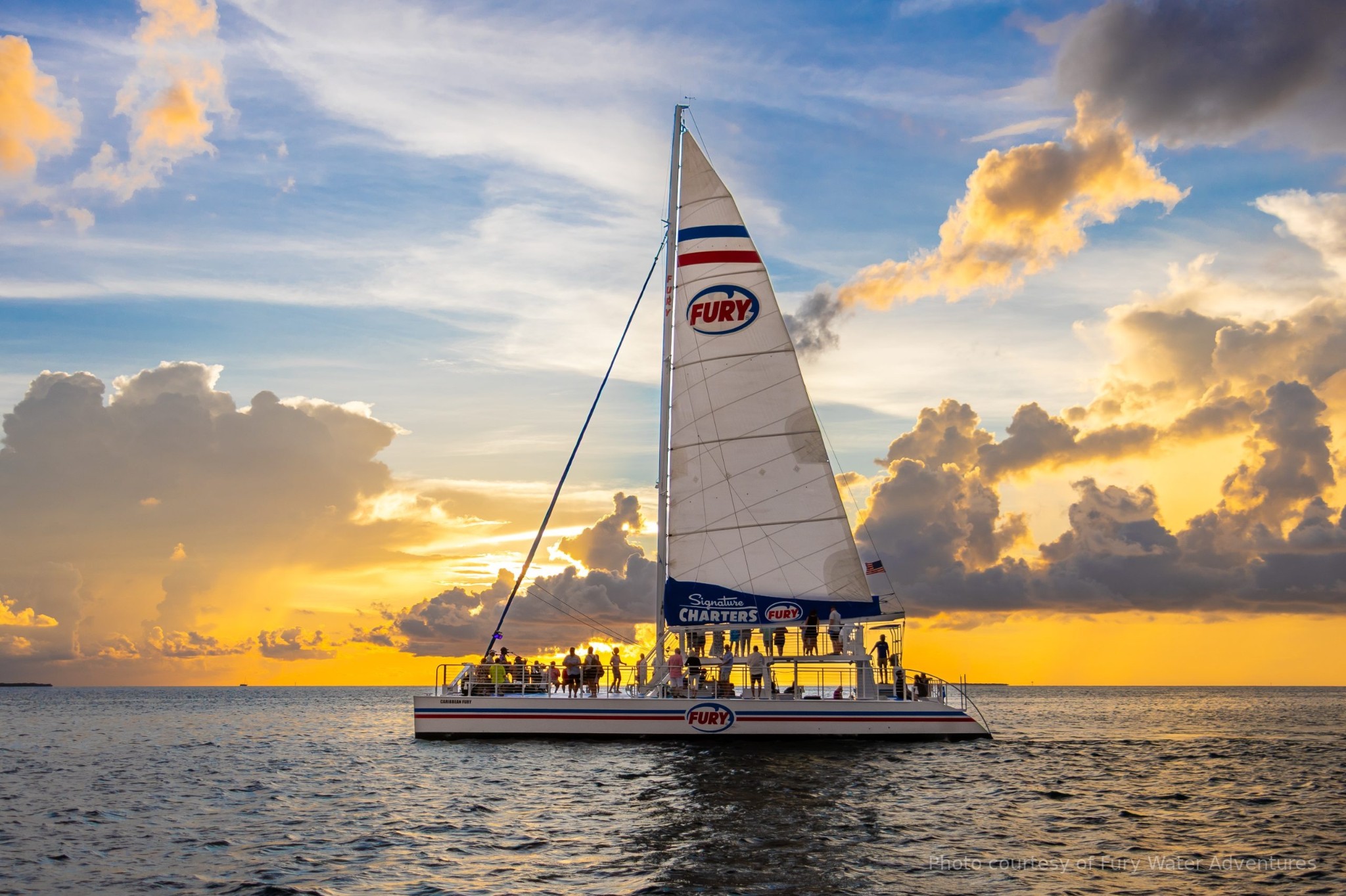
A large sailing catamaran can create a very different experience from a small private boat or an offshore fishing vessel.
Key West offers an enormous range of water activities. Some trips stay closer to the island. Some travel through more protected backcountry waters. Others head offshore or cover a long distance before reaching the main destination. Some boats spend most of the trip cruising, while others anchor or stop for swimming, snorkeling, kayaking or wildlife viewing.
A person who felt miserable on a deep-sea fishing trip may feel differently on a short harbor cruise. Someone comfortable on a large ferry may still be uncertain on a small center-console boat. One past experience is useful information, but it does not tell the whole story.
Boat size and design can affect how the ride feels, but there is no single boat type that is best for everyone. A larger catamaran, a traditional sailboat, a sportfishing boat, a private powerboat and a purpose-built eco-tour vessel each handle the water differently. The amount of open-air seating, shade, indoor cabin space, passenger capacity and freedom to move around can also shape your comfort.
Ask where passengers normally sit, whether you can remain outside in fresh air, whether there is a shaded area, and how much of the trip is spent underway. If you know that enclosed spaces or looking downward makes you uncomfortable, those details may matter as much as the boat’s length.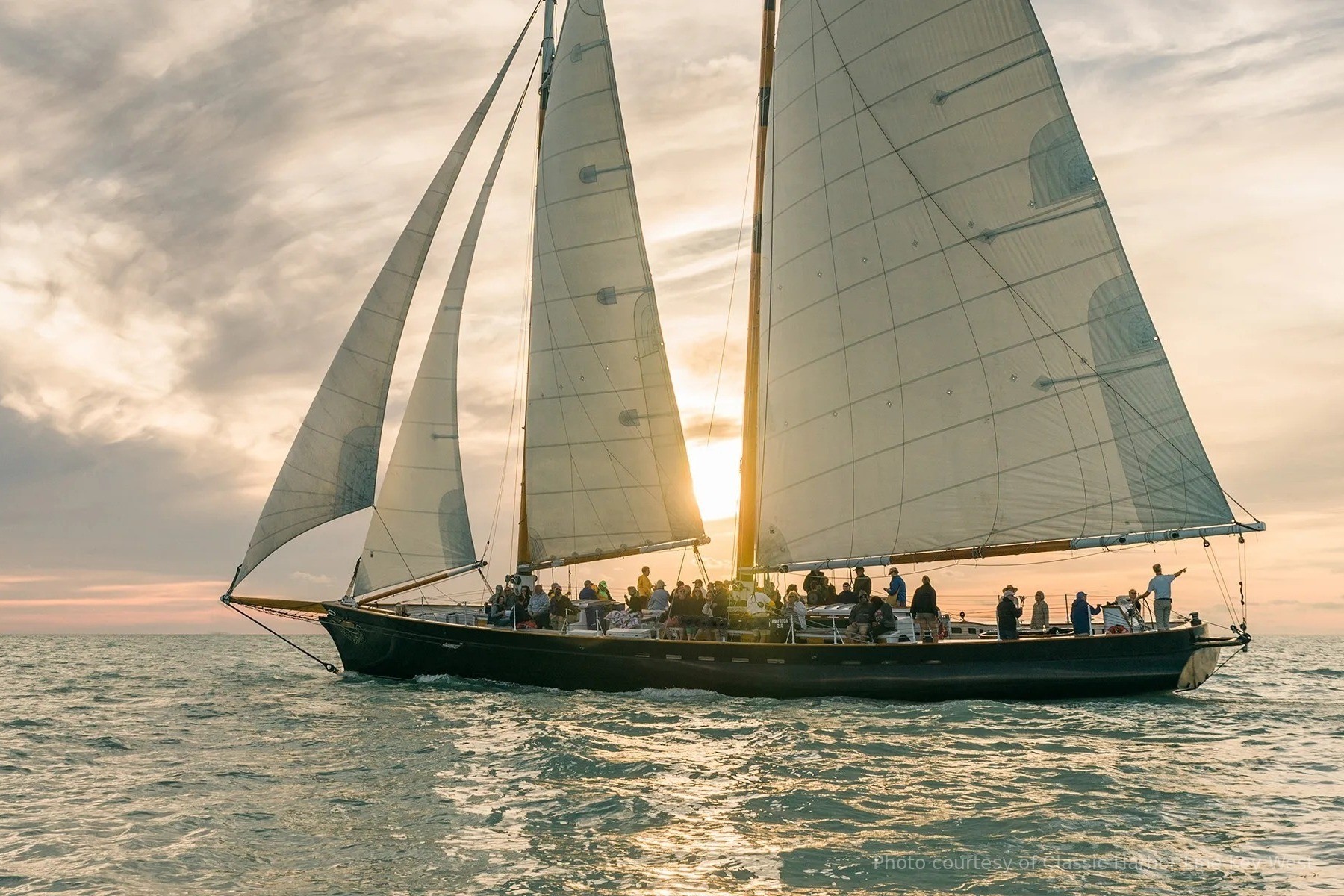
A traditional sailing experience has a different layout, pace and passenger experience from a powerboat excursion.
Two excursions can have equally appealing destinations yet require very different journeys. A protected-water sandbar outing is not the same as crossing open water. A harbor cruise is not the same as traveling many miles offshore. Before reserving, ask where the boat travels, how long it takes to reach the first stop and how much time is spent moving versus anchored.
The Dry Tortugas is a perfect example. Travelers can compare different ways to reach the Dry Tortugas, including the ferry, seaplane and private charter. Each option involves a different schedule, journey and overall experience. Choosing only by destination misses an important part of the decision.
A bright blue sky does not necessarily mean flat water. Wind speed, wind direction, waves, current, route and the vessel itself can all affect the ride. Conditions also change, which is why the same boat trip may feel calm one day and livelier on another.
No one can control the water or guarantee exactly how a trip will feel. What you can do is avoid treating the rain forecast as the only measure of a good boating day. If motion is a major concern, ask how the operator handles changing marine conditions and whether another day or route may be appropriate.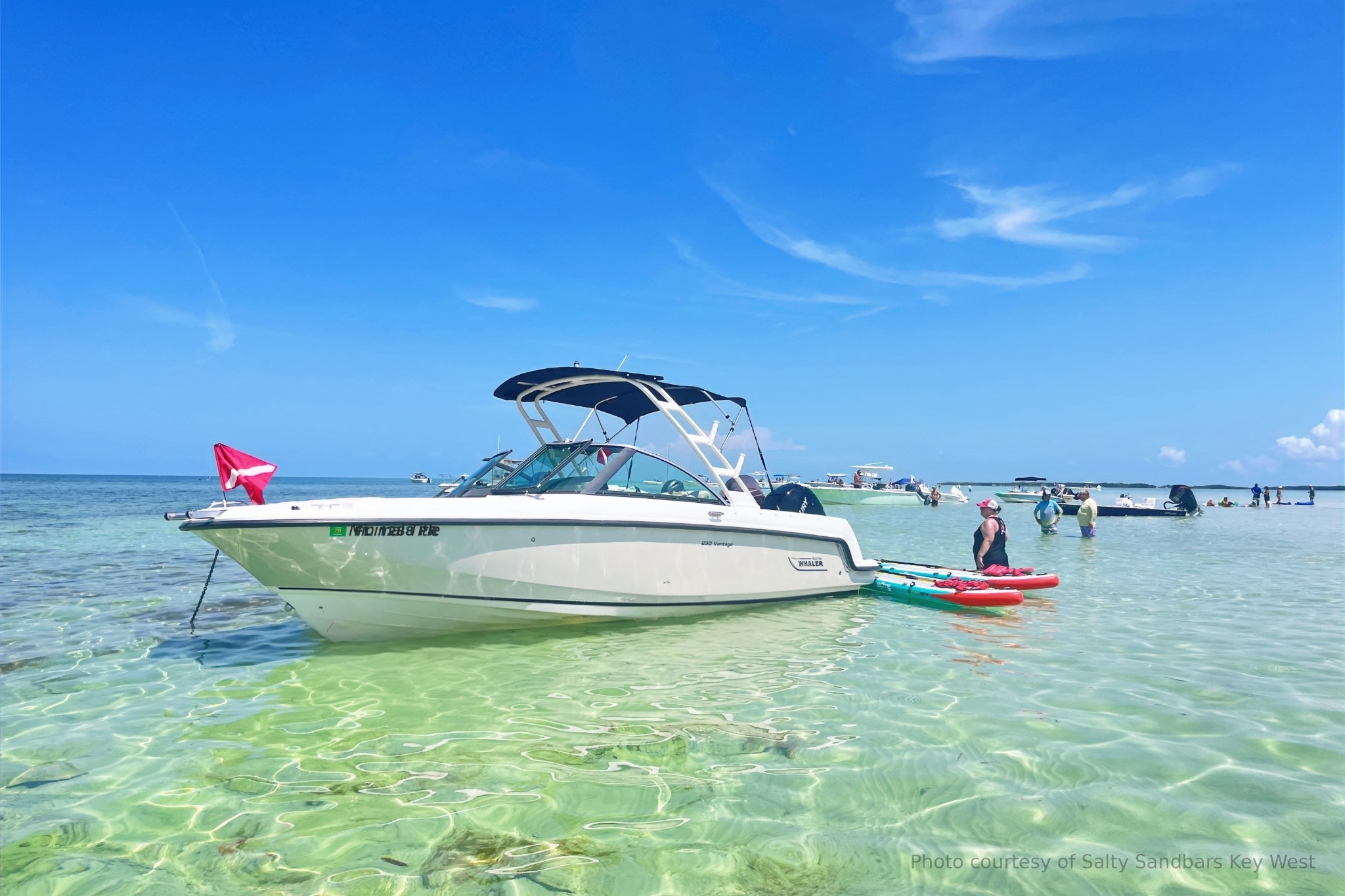
A small private powerboat may offer flexibility, but the route, travel time and conditions still matter.
If you are unsure how you will feel, beginning with a shorter experience may be more appealing than committing immediately to a full day offshore. But the advertised duration does not tell you everything. A four-hour trip might include long stretches anchored at a sandbar, or it might involve substantial travel time. Ask for the rhythm of the day, not just the start and end times.
A two-hour Key West sunset cruise may sound like a gentle place to start, but the boat style, route and evening conditions still vary. Compare the complete experience instead of assuming that every short cruise will feel the same.
Think about the last time you felt seasick. Were you offshore? Was the boat small or enclosed? Were you reading, looking at your phone or sitting inside? Had you eaten a heavy meal, had very little sleep or consumed alcohol? How long were you underway before you began to feel unwell?
You may not know exactly what caused the problem, but these details give you better questions to ask. Saying “I get seasick” is a starting point. Describing what happened helps narrow the choices more intelligently.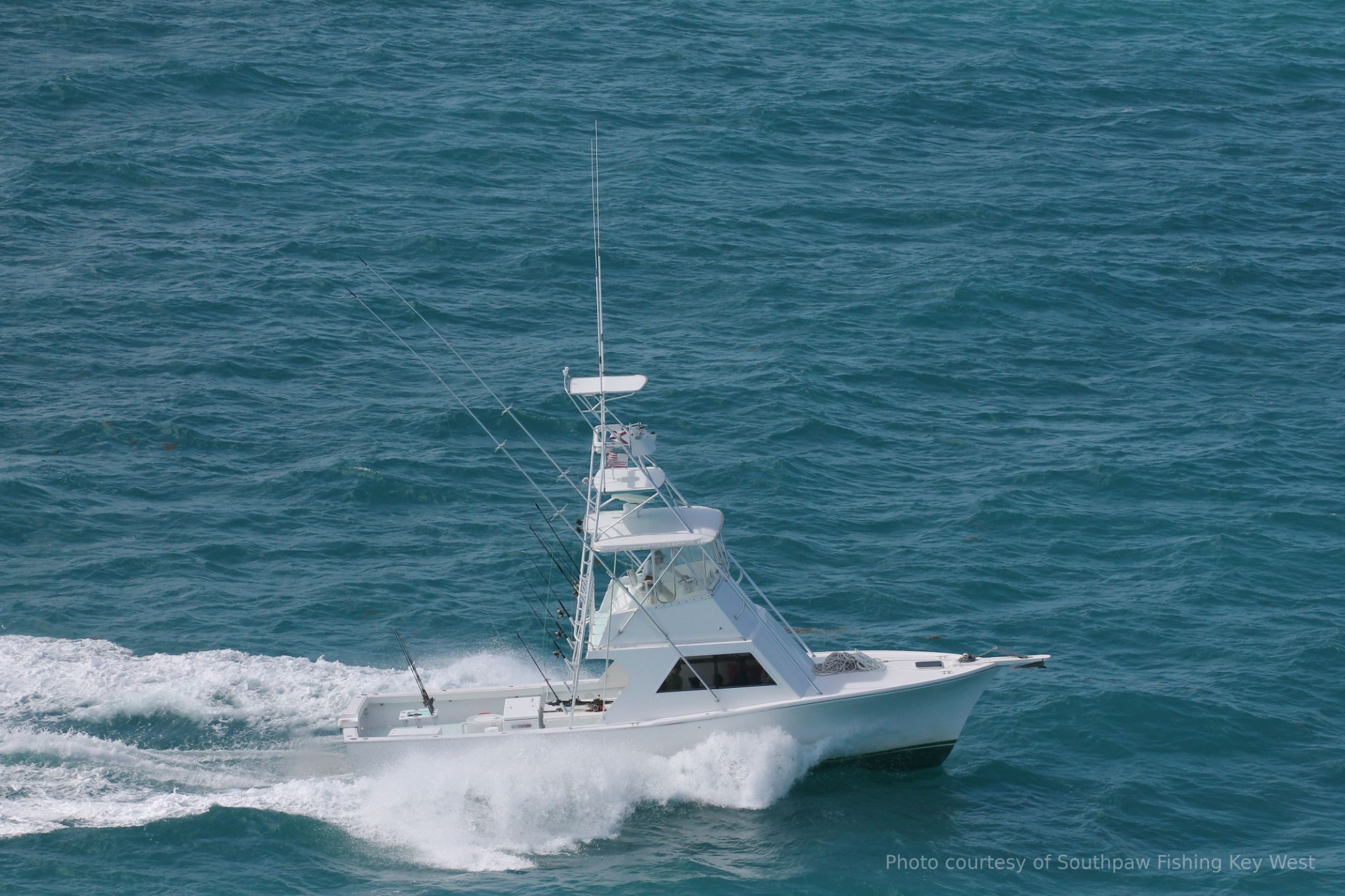
An offshore sportfishing day may involve a very different route and amount of time underway from a harbor or backcountry trip.
Plan to arrive rested, stay hydrated and eat small amounts of food rather than boarding extremely hungry or after a heavy meal. Once aboard, fresh air and a view of the horizon may help. Avoid reading or spending long periods looking at your phone if that tends to make you feel worse. Limiting alcohol before and during the trip is also a sensible choice when motion sickness is a concern.
If you are considering medication, talk with a healthcare professional before the trip. Some motion-sickness medicines can cause drowsiness, may interact with other medicines and may not be appropriate for every adult or child. Do not wait until you are standing at the dock to learn how a medication affects you.
If a water experience is one of the main reasons for your Key West vacation, try not to place it automatically on your final day. Scheduling it earlier may leave room to adjust if marine conditions, an operator decision or another unexpected issue changes the plan. That flexibility does not guarantee a replacement, but it gives you more possibilities than a last-day booking.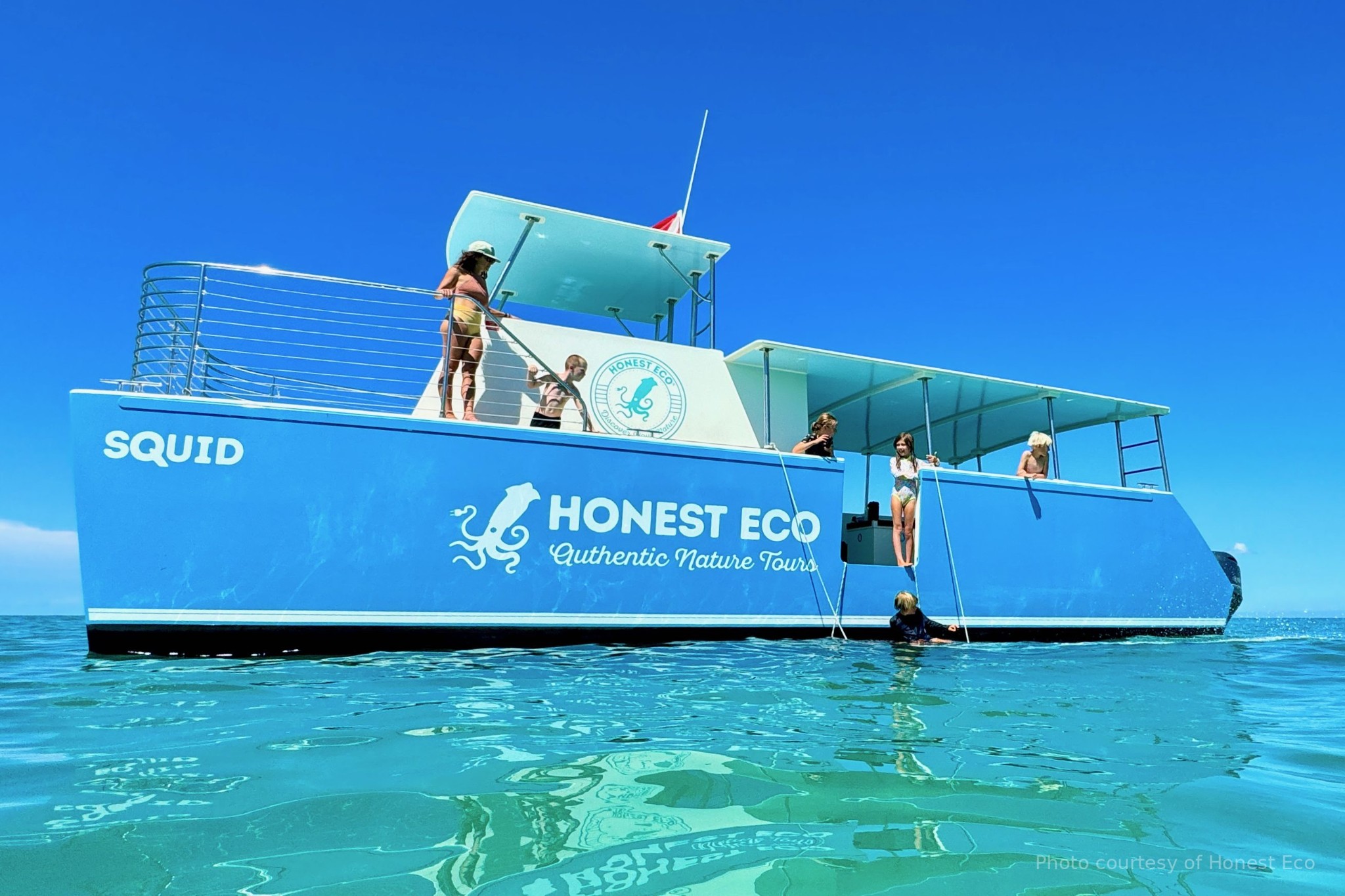
Purpose-built eco-tour boats add another option to compare when matching the vessel, route and activity to the traveler.
The goal is not to talk yourself into a boat trip that fills you with dread. You might prefer a shorter cruise, a protected-water outing, a private trip with more flexibility, a glass-bottom experience or a waterfront day on land. There are many ways to enjoy Key West, and the “must-do” activity is the one that fits you, not the one everyone else insists belongs on your list.
When I help you compare Key West water experiences, I look beyond the activity name. I consider the boat, route, duration, amount of time underway, passenger experience and the concerns you share with me. I cannot promise that you will not get seasick, but I can help you ask better questions and make a more informed choice.
Ready to choose a Key West experience that fits your vacation? Start planning your Key West vacation with me or call (305) 304-8910.